


Protect Your Network with Expert Firewall Management Services: Secure, Configure, and Monitor Effectively
By Mustafa Sharif, Marketania
Safeguarding network assets is essential as cyber threats rise. Expert firewall management secures, configures, and monitors networks to protect sensitive data and maintain continuity, covering setup, monitoring, best practices, compliance, and personalised consultations.
Understanding firewall management reduces breach risk. This guide outlines core setup components, monitoring practices, compliance obligations, and tailored solutions for small and medium-sized organisations.
Key Takeaways
- Expert firewall management secures networks by configuring, monitoring, and updating firewalls to prevent cyber threats.
- Proper firewall setup includes defining security policies, segmenting networks, and applying regular software updates.
- Next-generation firewalls combine traditional and advanced features, ideal for small and medium-sized businesses.
- Continuous monitoring and regular audits detect anomalies and ensure firewall effectiveness against evolving threats.
- Managed firewall services enhance network protection through specialized threat detection and performance optimization.
- Best practices include enforcing least privilege access, multi-factor authentication, and backing up firewall configurations.
- Compliance with regulations like GDPR, PCI-DSS, and HIPAA is essential for legal and security standards adherence.
- Personalized cybersecurity consultations tailor firewall strategies to address unique business vulnerabilities and needs.
- Emerging firewall trends include AI integration, cloud-based solutions, and zero trust architectures for future-proof security.
Firewall Setup and Configuration:
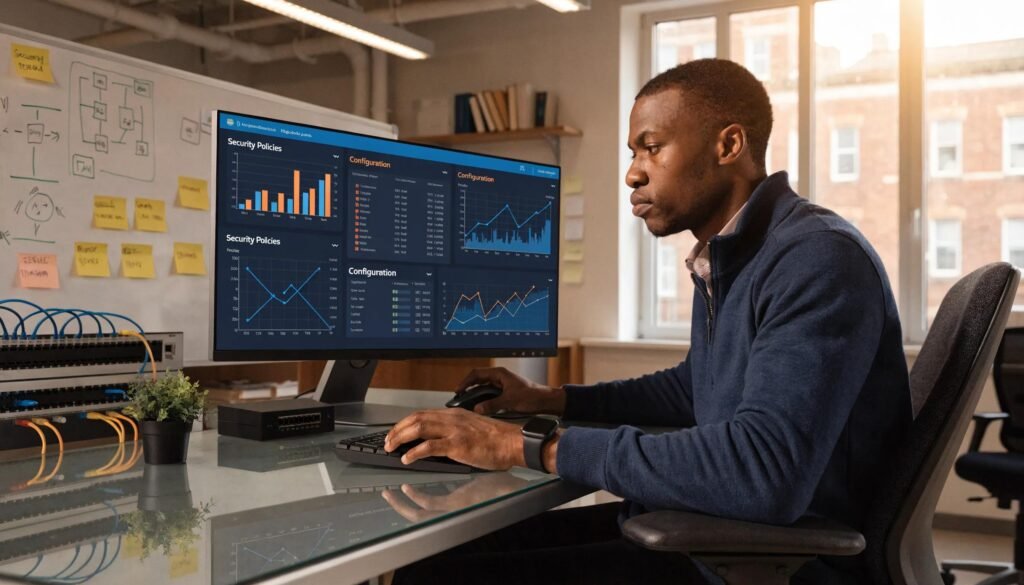
Effective firewall management begins with a clear perimeter: separate trusted internal networks from untrusted external ones and apply security policies, segmentation, and timely updates to reduce exposure.
- Define Security Policies: Establish clear security policies that dictate what traffic is permitted to enter or exit the network.
- Segment Networks: Divide networks into segments to enhance security and control traffic flow between different parts.
- Regular Updates: Implement routine updates to ensure the firewall software is equipped to handle the latest threats.
How to Optimize Firewall Rules for Enhanced Network Security
Optimise rules to reduce the attack surface: apply least privilege, remove obsolete rules, and review rule sets regularly to match operational changes and threat indicators.
Which Firewall Types Best Fit Small and Medium Businesses?
Next-generation firewalls (NGFW) blend packet filtering with intrusion detection and prevention, making them a practical balance of performance and advanced protection for SMBs.
Monitoring and Maintenance:

Continuous monitoring and scheduled maintenance provide visibility into network activity, enabling prompt anomaly detection and a proactive defence posture.
- Continuous Monitoring: Implement tools that provide real-time visibility into network traffic patterns and alerts on suspicious activity.
- Regular Audits: Periodically assess firewall performance and configurations to meet evolving security requirements.
- Incident Response Plans: Develop and maintain detailed incident response plans to swiftly address security breaches when they occur.
How Do Managed Firewall Services Improve Network Protection and Performance?
Managed services deliver expert oversight, threat detection, and performance tuning tailored to organisational needs, freeing internal teams to focus on core objectives.
What Are the Benefits of Expert Firewall Management for Cybersecurity?
Expert management improves threat detection, aids regulatory compliance, and reduces downtime by applying proven controls and rapid remediation processes.
Best Practices:
Follow core practices to strengthen security and resilience: minimise access, increase authentication strength, and ensure configuration backups for rapid recovery.
- Least Privilege Access: Always enforce least privilege access for all users and devices.
- Multi-Factor Authentication: Use multi-factor authentication to add an extra layer of protection for sensitive data.
- Backup Configurations: Regularly back up firewall configurations to ensure quick recovery in the event of a compromise.
Why Is Investing in Cybersecurity Firewall Solutions Crucial for Sustained Network Growth?
Robust firewall solutions protect data integrity, customer trust, and reputation, reducing disruptions so organisations can grow securely.
What Tools and Techniques Are Used for Effective Firewall Monitoring and Incident Response?
Monitoring commonly uses SIEM platforms to aggregate logs and alerts; automated incident response and playbooks speed containment and remediation when threats appear.
Which Firewall Monitoring Tools Detect Intrusions and Threats Efficiently?
Effective detection often combines multiple tools:
- Intrusion Detection Systems (IDS): Monitors network traffic for suspicious activity and alerts administrators.
- Intrusion Prevention Systems (IPS): Proactively detects and blocks threats before they can exploit vulnerabilities.
- Traffic Analysis Tools: Provides insights into normal traffic patterns to identify anomalies.
Compliance Requirements:
Compliance is a key consideration: firewalls must support access controls, logging, and processes that meet applicable regulations and standards.
| Compliance Type | Key Requirement | Example Regulation |
|---|---|---|
| Data Protection | User consent for data collection | GDPR |
| Network Security | Regular audits and vulnerability assessments | PCI-DSS |
| Incident Reporting | Timely reporting of breaches | HIPAA |
Use the compliance categories above to inform firewall policy, logging, and audit practices that reduce legal risk and reinforce customer trust.
How Personalized Consultations Enhance Firewall Security for Your Business
Personalised consultations analyse configurations and exposures to recommend tailored controls that address identified vulnerabilities and scale with change.
Understanding the Importance of Tailored Security Solutions
Customized solutions let organisations address specific challenges more effectively by closing gaps in configuration and aligning controls with business needs.
Emerging Trends in Firewall Technologies for 2026
Key trends include:
- AI and Machine Learning: Enhances threat detection and response times.
- Cloud-Based Firewalls: Provide scalable, flexible protection for cloud infrastructures.
- Zero Trust Architectures: Require continuous verification rather than implicit trust.
Recognising these trends helps organisations plan and adapt security strategies for an evolving threat environment.
Frequently Asked Questions
1. What are the common signs that my firewall needs reconfiguration?
Signs include unexpected slowdowns, frequent alerts, increased unauthorised access attempts, extensive blocked traffic in logs, or a recent security incident. Regular reviews detect these issues early.
2. How often should firewall policies be reviewed and updated?
Review policies at least every six months and after significant operational changes, breaches, or new regulatory requirements to maintain effectiveness.
3. What role does firewall management play in compliance with data protection laws?
Firewall management enforces access controls, maintains audit logs, and keeps security measures current, which helps demonstrate compliance with laws such as GDPR and HIPAA.
4. Can small businesses afford managed firewall services?
Many managed services are scalable and cost-effective, allowing small businesses to access advanced security without the overhead of a full in-house team.
5. What should I look for when choosing a firewall provider?
Evaluate technical expertise, industry experience, and reputation. Prioritise real-time monitoring, advanced detection, compliance support, and tailored service.
6. What are the potential consequences of neglecting firewall management?
Neglect can lead to data breaches, financial loss, reputational damage, legal non-compliance, and extended downtime—threatening business continuity.
7. How can I educate my team about firewall security best practices?
Use regular training, workshops, newsletters, and webinars to reinforce policies, phishing awareness, and the role of firewalls in protecting data and systems.
Conclusion
Effective firewall management protects networks, supports compliance, and reduces operational risk. Leverage expert services or consultations to align your firewall strategy with business needs and preserve reputation and continuity.